

Once you are well-versed in reading the different clefs, as well as the notes within each clef, the next step to reading music is to be able to read a key signature.
While singers can sometimes get away with not understanding key signatures, as well as accidentals (as long as they are the ones playing the notes and are just matching pitch to a recording or someone else playing piano or an instrument), the understanding of key signatures is crucial for instrumentalists.
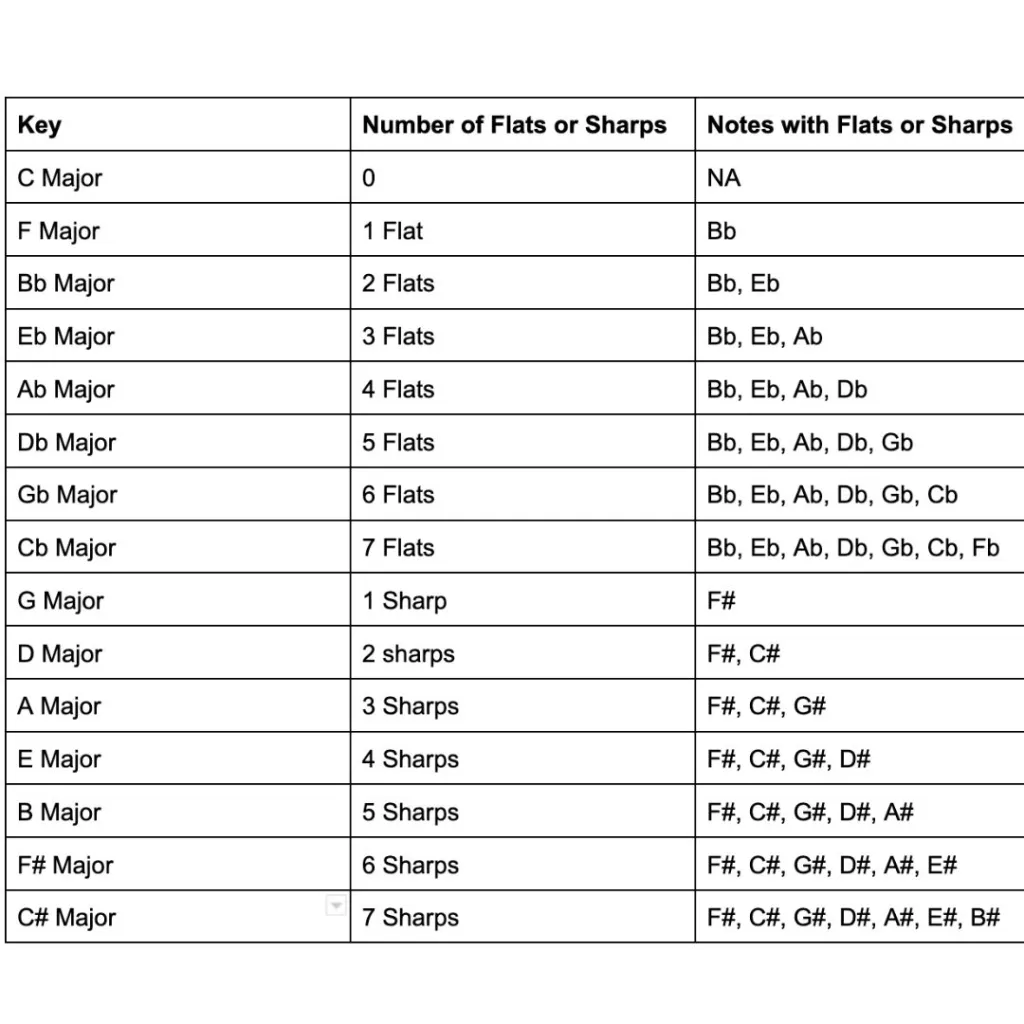
There are 15 major key signatures, one for each note in the scale. So, how do you know what key signature a song is in? Well, that’s where accidentals come into play.
Accidentals
Accidentals are notes set apart by a sharp (#) or flat (b). The line or space they fall on determines which note is flat or sharp. For instance, in C Major, there are no flats or sharps. F Major has one flat–a Bb, and Bb Major has 2 flats, Bb and Eb.
One important thing to note is that a sharped note is equal to the flat of the note immediately above it on the scale. For instance, an F# is the same as a Gb, and a C# is the same as a Db.
Given this information, you might notice that there is some overlap in the key signatures as well. For instance, F# Major is the same as Gb Major. Every sharped note in F# is equivalent to each flat in Gb.
Naturals
There is one other accidental that is important to note, and that is a natural sign.
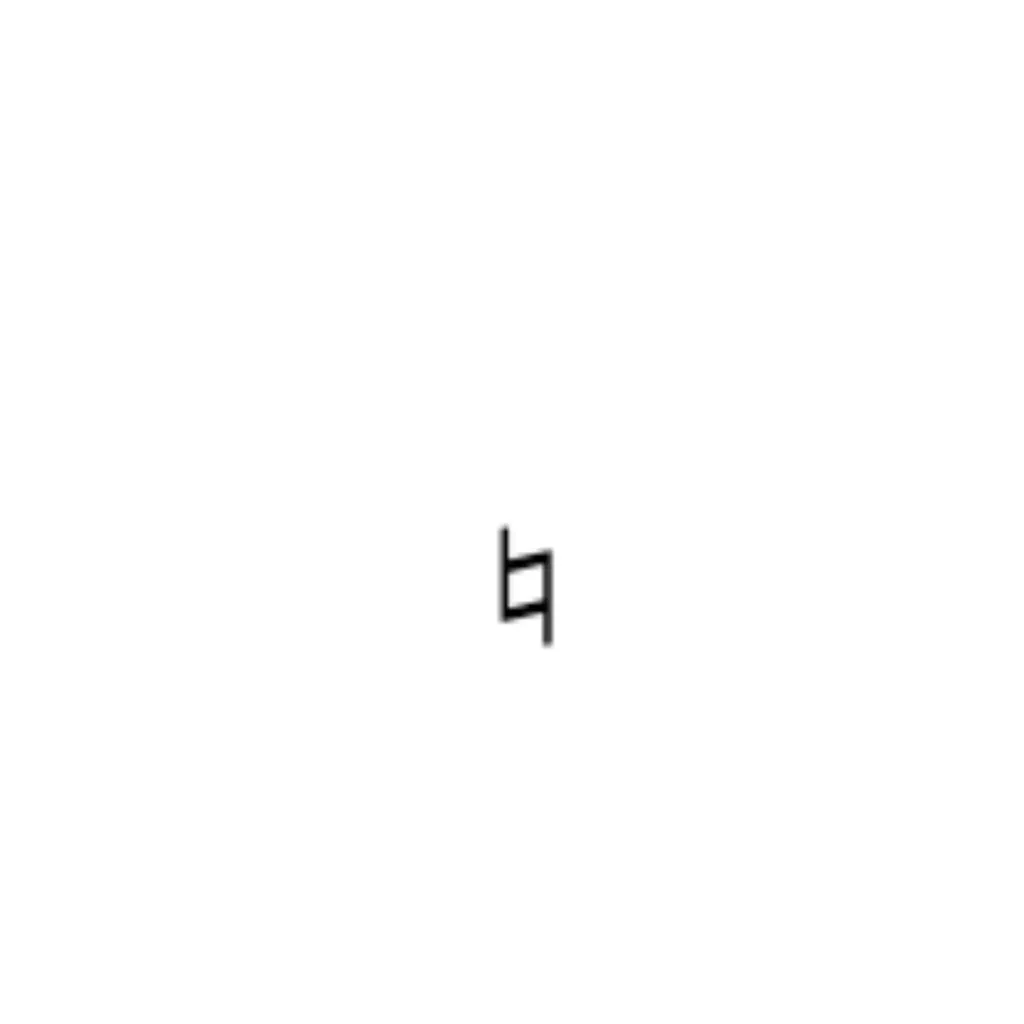
A natural sign is used to cancel out a previous sharp or flat, whether it is in the key signature or if a note is changed in the music. Sharps and flats aren’t just found in the key signature, but also in the music itself.
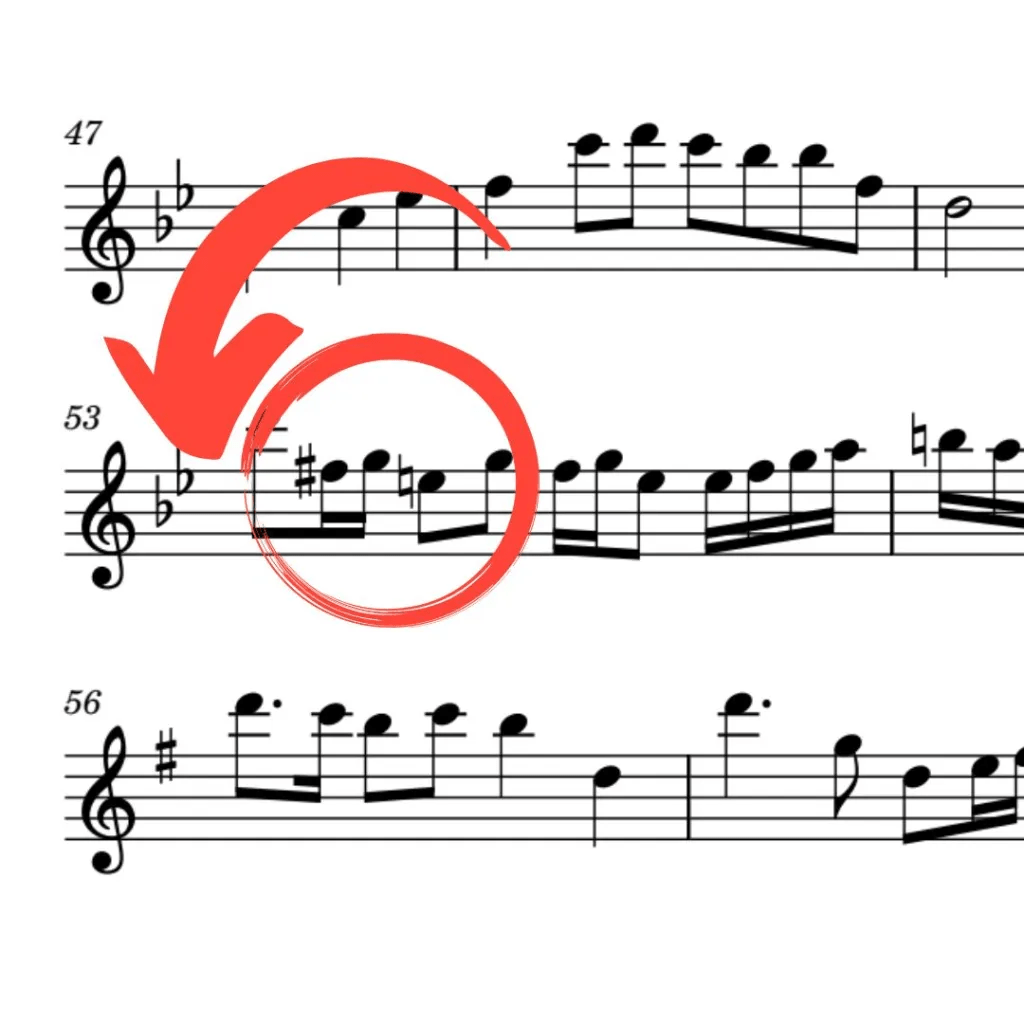
In the above image, the red arrow points to the key signature, which is Bb Major, with two flats: Bb and Eb. The red circle is around two accidentals–a sharp next to the F, making it an F#, and a natural beside the Eb, making it an E natural.
How to Differentiate Between Multiple Accidentals in One Chord
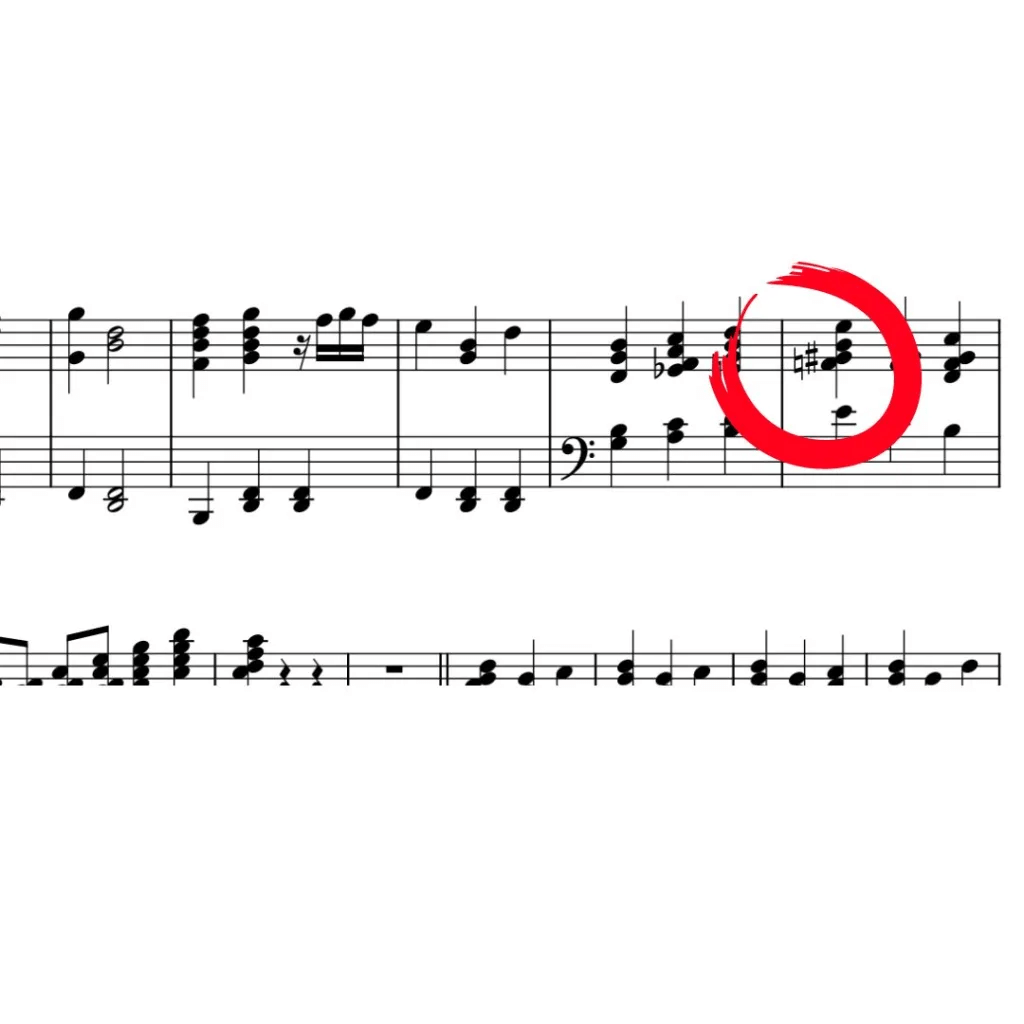
In the image above, a chord is circled. There are two accidentals in the chord, so how do you know which one goes with which note? You look at the line or space the accidental is on. In this example, the sharp is on the G-line, and the natural is on the F-line. This means that the G is sharp, and the F is natural.
This usually happens in piano music or in songs where more than one vocal part is on one line but can occur any time there are two or more voices on a line.
Is there anything else in music theory or any other topics in the realm of music you’d like to ask about? Comment below.


 AC & the Virtual Virtuosos
Leave a comment