There are five stages of making any of our music shows: arranging the music, auditions and casting, rehearsals and production, filming, and editing. Let’s dive into what happened inside the making of the Wicked Music Show.
Arranging the Music
The arrangers for the Wicked Music Show included myself, Marissa Mann, and Megahn Howard. I arranged No One Mourns the Wicked, One Short Day, As Long As You’re Mine, and For Good. Marissa arranged Defying Gravity, The Wizard & I, Dancing Through Life, Popular, I’m Not That Girl, I Couldn’t Be Happier, Wonderful, and No Good Deed, and Megahn arranged What Is This Feeling.
You’ll notice that there is a pattern to who is assigned what song, at least for Marissa and I. For me, arranging music is about the creativity of arranging songs, figuring out who sings what part, figuring out what instruments to use and so on and so forth.
For Marissa, she has expressed preferring the simpler songs, where she can just input the notes exactly as they appear on the sheet music. She said in particular that she finds it to be relaxing.
I believe that Megahn was originally assigned Dancing Through Life and Wonderful, however, was unable to complete them at that time, which is why they were given to Marissa. Shortly before production, I realized that I had forgotten to arrange What Is This Feeling–it had fallen through the cracks. Megahn had more free time then, and was able to arrange the song for me while I worked on getting guidetracks ready for everyone.
I should also note that I did make some edits to each of the arrangements from Marissa and Megahn, either by changing the key or changing the tempo or some other sort of edits.
Casting & Auditions
In the past, I have primarily cast members of Engaging Karaoke in my shows. However, as we have been moving toward more professional shows, it was less of a fit for people from karaoke (I’ve actually had members tell me that they want karaoke videos for guide tracks and that’s it, expressing dissatisfaction with anything else).
For Wicked, I created a sign up sheet to send out on Facebook, and I got several signups. However, a much smaller portion signed the new contracts I created for the Wicked Music Show. From there, even fewer turned in their videos.
The Cast for the Wicked Music Show ended up being:
Elphaba/G(a)linda: April Cox
Fiyero/The Wizard: Megan Howard
Chorus:
Soprano 1 & Alto 1: April Cox
Soprano 2: Diane Weigle
Alto 2: Megahn Howard
Rehearsals
In the past (and including the Wicked Musical Show), I’ve scheduled optional vocal rehearsals that mostly no one came to. Starting with the Moana Music Show, I had participants schedule 1:1 rehearsals with me if they felt they needed it.
For any shows that require singing in a foreign language or particularly fast passages, I require participants to meet with me for a diction rehearsal to go over lyrics. The length of time for the rehearsal depends on the amount of lyrics they’ll have to learn. On average, the rehearsal is about 30 minutes or shorter.
Finally, some shows have required dancing (The Little Mermaid, and upcoming A Very Potter Music Show), and these will result in scheduled, required, dance rehearsals.
Filming
For the first six shows–Frozen through Wicked–I set deadlines for recordings. The problem with this is that more than half of the people in the shows would turn things in late, giving me little time to edit. That’s why for Wicked, I changed the system from a one show at a time model to a six weeks on, six weeks off model.
For the first five shows–Frozen through Encanto–the recordings were due approximately one month before the premiere. I would then spend that month–or as it turned out oftentimes, two weeks before the show scrambling to edit everything.
For Wicked, the recordings were due the last day of February, with the production period beginning around January 14. We then had six weeks off where I worked on casting for the Moana Music Show, alongside the editing. I’m still editing the Wicked Music Show as of the date of writing this, and the Moana Music Show is currently in production. The Wicked Music Show will premiere June 1.
Starting with the Moana Music Show, participants will schedule a time to record with me over zoom. This way, I can walk them through the process as they record and make sure everything is done correctly and on time.
Editing
There are approximately four stages of editing per song, no matter the show.
- The Accompaniment: The first part of editing involving putting together the accompaniment. For some songs, this is rather simple as the accompaniment is just midi piano from our composition software, while for others, it is more complex. Some of the songs have one or more other instruments.
- The Vocals: Second, I add and edit the vocals. This involves lining up all vocals with the accompaniment and then editing the vocals themselves. At the very least, I add a little bit of reverb and a limiter. A limiter just sets the maximum volume, so that the recording doesn’t distort on Youtube. Naturally, solos take the least amount of time to edit, with ensemble songs taking the longest. Some vocals, in addition, also need the pitch or timing to be edited. While the amount of editing I can do on this is limited, particularly on solos, I will adjust these on the vocals that need it primarily in ensemble numbers to ensure everyone blends together.
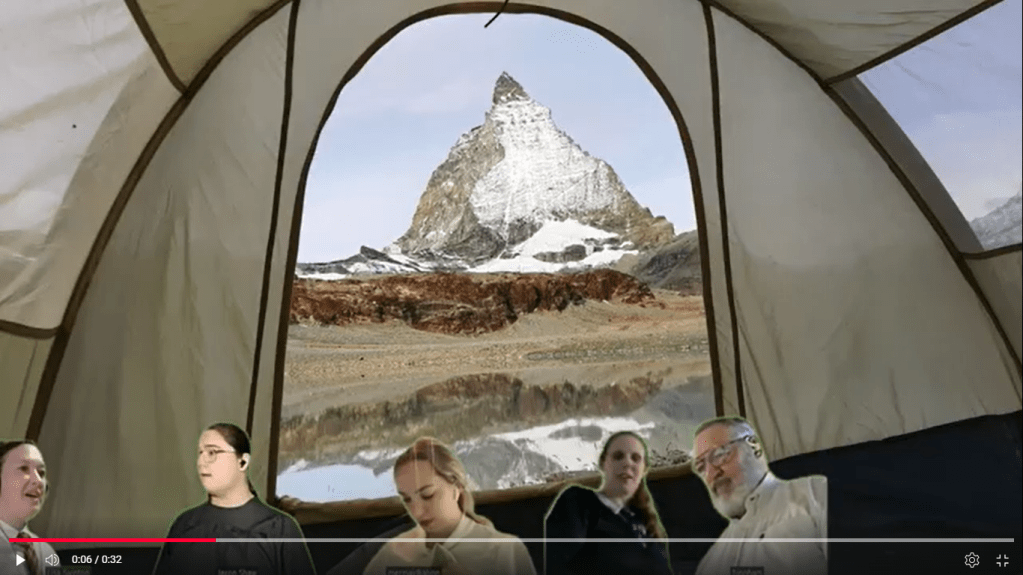
- The Video: Third, is editing the video. Often this is rather simple and involves removing the green (or blue screen) and adding in a background. Sometimes, I use color grading to brighten the video if it is needed.
- Finally, if there are going to be any special effects, I add these last. In the case of the Wicked Music Show, it was really just turning Elphaba’s skin green. In past shows, I’ve had characters move onto the screen or really just move in general. I use a lot of special effects for dance scenes.
Conclusion
So, there you have it–that is my process of putting together a music show. What do you think? Do you have any questions about the process? Comment below.
 AC & the Virtual Virtuosos
Leave a comment